
Title: From Agent-based Models to City Scale Digital Twins Past experiences and current challenges
| Affiliation: | University of Oxford, United Kingdom | |
| Date and Time of Talk: | 15th DECEMBER 2022 | 14:40 PM – 15:20 PM |
Abstract:
This talk features the main philosophy and the development process of the agent-based modelling & simulation (ABMS) paradigm for analyzing and solving complex problems. Modelling real-world complex systems is a challenging task. Complex systems are generally made of many parts (or units, individuals or subsystems). There are many relationships, interactions, dependencies and or competitions between these parts. And the parts produce combined effects (emergence) that are not easily foreseen and may often be novel (desirable) or chaotic (undesirable). In order to study real-world complex adaptive systems, adequate computational modelling methods are necessary. ABMS has been identified as a suitable modelling technique and is used by many researchers as a suitable approach for complex socio-technical problem solving.
In this talk, a Python based open-source geo-spatial, agent-based, parallel simulation framework will be presented which is used for the study of COVID-19 infectious disease spread in a geospatial virtual environment of a selected city. This retrospective will be followed by a discussion on how ABMS are best suited for building city-scale digital twins, and what are the current challenges that could lead to a reciprocative collaboration.
Biography:
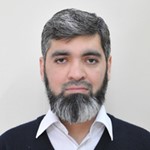
I am currently working as a senior postdoc researcher at the Artificial Intelligence and Machine Learning group, Department of Computer Science, University of Oxford [2022]. I have served as fulltime Senior Research Fellow at the Center for Global Health Infectious Disease Research, College of Public Health, University of South Florida [2021-2022]. I have served as Research Fellow/scientific software engineer at the Brunel University London, College of Engineering, Design and Physical Sciences Department of Computer Science in the area of Modeling & Simulation [2019-2021]. I am an Assistant Professor at the Department of Computing, School of Electrical Engineering and Computer Science (SEECS), National University of Sciences and Technology, (Pakistan); and the founding Director of the Center for Research in Modeling & Simulation (CRIMSON) [2015-2019].
Earned Doctoral degree in Software & Computer Systems at School of Information and Communication Technology (ICT), KTH-Royal Institute of Technology Sweden in 2013; Earned Master’s degree in Software Engineering of Distributed Systems at School of Information and Communication Technology (ICT), KTH, Sweden in 2007
Research interests in Modern Software Engineering, Modeling & Simulation; Digital Twin Technologies, Geo-spatial Data science, Geo-spatial Visual Analytics, Analysis & formal verification of complex systems and innovative Information and Communication Technologies with several years of experience.
Visited or worked in remote collaboration with: University College London, GeorgiaTech, Arizona State University, Georgia State University, State University of New York, Fredonia, EPFL, University of Malaga, Spain, Swedish Defense research agency (FOI), NUS & NTU Singapore and Modeling and Simulation Center (MODSIMMER), METU on different research projects; published quality research papers and delivered different workshops, lectures and invited talks; served in IT industry earlier at various leading roles, at different private and governmental organizations (with experience and special interest in Distance/E-learning technologies).